
Selecting the right warehouse tent involves considering several critical factors to ensure it meets your storage needs and operational requirements. Here’s a comprehensive guide to help you choose the ideal warehouse tent:
1. Determine Your Space Requirements
Size and Capacity:
Calculate the amount of space needed to store your goods, considering both current inventory and potential future growth. Ensure the tent can accommodate the volume and dimensions of your items, with enough room for aisles and equipment.
2. Assess the Site Conditions
Ground Surface:
Evaluate the ground where the tent will be installed. Whether it’s concrete, asphalt, gravel, or dirt, ensure it’s suitable for the tent structure and consider any necessary groundwork preparations.
Accessibility:
Check if the site is accessible for delivery trucks, forklifts, and other machinery. Ensure there is enough space for easy loading and unloading of goods.
3. Consider the Climate and Weather Conditions
Weather Resistance:
Choose a tent that can withstand local weather conditions, including wind, rain, snow, and extreme temperatures. Look for features like high-quality, weather-resistant fabric and robust structural design.
Ventilation and Climate Control:
Ensure the tent has adequate ventilation to prevent moisture buildup and consider options for heating or cooling systems if you need to maintain specific temperature conditions inside the tent.
4. Evaluate the Structural Integrity
Durability:
Select a tent made from high-quality materials such as galvanized steel frames and heavy-duty PVC or polyester fabric. Check the tent’s wind and snow load ratings to ensure it can handle severe weather.
Security:
Ensure the tent can be securely anchored to the ground and consider additional security features like lockable doors and reinforced walls if you need to protect valuable inventory.
5. Determine the Tent Type
Clear Span Tents:
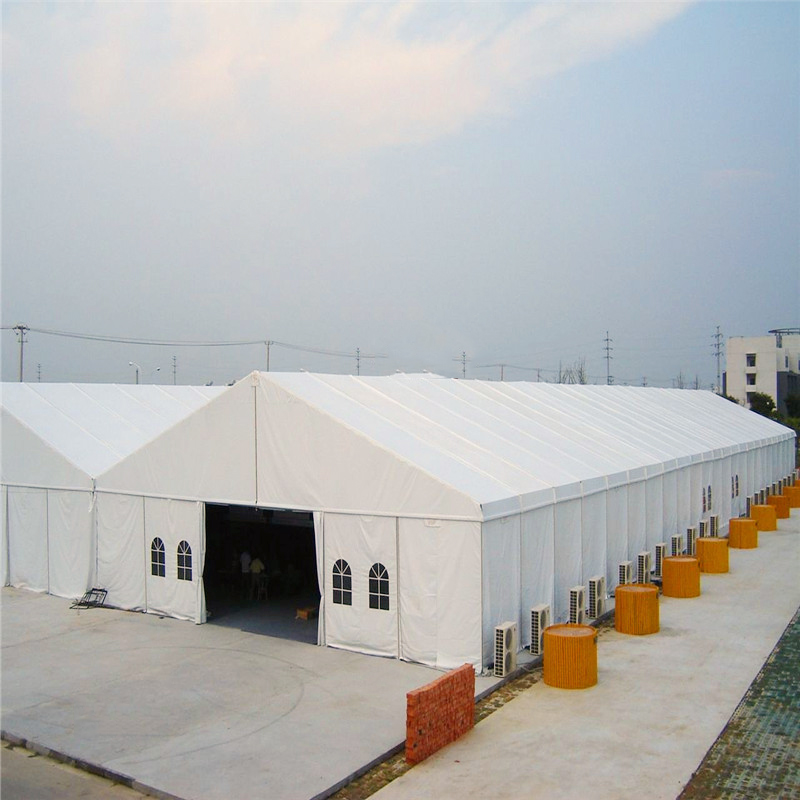
Ideal for warehouse purposes due to their large, unobstructed interior space. They provide maximum usable space without internal columns or supports.
Pole Tents:
Generally less suitable for warehouse use due to the internal poles, which can obstruct space and limit layout flexibility.
Frame Tents:
Can be used for smaller storage needs and offer a good balance between cost and functionality, though they may not provide as much clear space as clear span tents.
6. Consider Installation and Mobility
Ease of Installation:
Check if the tent can be easily assembled and disassembled. Quick installation is crucial for minimizing downtime and disruption to your operations.
Mobility:
If you anticipate needing to relocate the tent, consider portable options that can be moved and reinstalled with minimal effort.
7. Check for Customization Options
Size and Configuration:
Ensure the tent can be customized in terms of size and configuration to meet your specific storage needs. Modular designs can offer flexibility for future expansion.
Additional Features:
Look for customization options such as windows for natural light, specific door types (e.g., roll-up, sliding), and interior partitions if you need separate storage areas.
8. Assess Budget and Cost
Initial Cost:
Compare prices from different suppliers to find a tent that fits your budget. Consider both purchase and rental options, depending on your long-term needs.
Long-Term Value:
Consider the long-term value of the tent, including durability, maintenance costs, and potential for future use or resale.
9. Choose a Reputable Supplier
Experience and Reputation:
Select a supplier with a strong reputation and experience in providing warehouse tents. Check reviews and ask for references to ensure reliability.
Warranty and Support:
Ensure the supplier offers a warranty and provides support for installation, maintenance, and any potential issues.
Conclusion
Choosing the right warehouse tent involves careful consideration of your space requirements, site conditions, climate and weather resistance, structural integrity, tent type, installation ease, customization options, budget, and the supplier’s reputation. By evaluating these factors, you can select a warehouse tent that meets your operational needs and provides a durable, secure, and cost-effective storage solution.